Your Nose Knows: Decoding What Your Garage Is Trying to Tell You
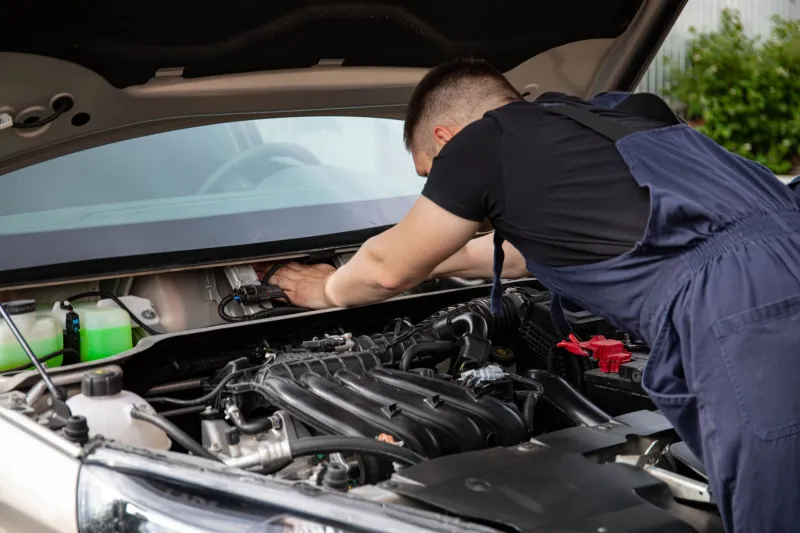
Here's something they don't put in the owner's manual: your nose is one of the best diagnostic tools you own. Before a warning light flickers, before a temp gauge creeps, before anything shows up on a scan tool—something in your engine bay is already broadcasting the problem through smell. Most of us have learned to tune it out. That's a mistake.
Experienced mechanics will tell you they've caught blown head gaskets, failing alternators, and fuel delivery problems just by walking into a cold garage in the morning. It's not magic. It's pattern recognition built over years of paying attention. The good news? You can develop that same instinct, and it starts right here.
The Baseline You're Working From
Before you can diagnose a bad smell, you need to know what normal smells like. A well-maintained daily driver has its own scent profile—a faint mix of warm metal, a hint of exhaust, maybe a touch of oil if it's got some miles on it. That's your baseline. Anything sharper, sweeter, or more chemical than that deserves a second look.
The same goes for your project car. Know what it smells like after a good run. Know what it smells like when it's been sitting. Changes from that baseline are your first clue that something's shifted.
Burnt Oil: The Smell of Something Getting Fried
This one's unmistakable—acrid, sharp, almost like something scorching on a stove burner. Burnt oil smell usually means oil is making contact with hot metal somewhere it shouldn't be. Common culprits include:
- Valve cover gaskets leaking oil onto exhaust manifolds
- Oil pan gaskets dripping onto hot exhaust pipes underneath the car
- PCV system failures pushing oil vapor into places it can't escape
- Turbo seals if you're running forced induction
The danger here isn't just the smell—it's fire risk. Oil dripping onto a hot exhaust manifold is a real hazard, especially on older vehicles with compromised gaskets. If you're catching this smell consistently, don't ignore it hoping it'll sort itself out. Crawl under there with a flashlight and start tracking the source.
Sweet Coolant: The Friendly Smell With an Unfriendly Cause
Coolant has a distinctly sweet, almost syrupy odor—some people compare it to maple syrup or candy. It's weirdly pleasant for something that signals potential disaster. When you smell it in your garage, your first thought should be: where is it leaking from?
Minor coolant smells can come from a dripping hose clamp or a seeping overflow reservoir cap—annoying but manageable. The one that should get your attention is coolant smell coming from inside the car or mixing with your exhaust. That sweet smell combined with white smoke out the tailpipe is a classic head gasket symptom, and catching it early is the difference between a $500 repair and a $3,000 engine rebuild.
Also worth knowing: ethylene glycol—the active ingredient in most antifreeze—is toxic to pets. That sweet smell attracts dogs and cats, and even a small amount can be fatal. Clean up any puddles immediately.
Electrical Burning: The Smell That Should Stop You Cold
There's a particular sharp, plasticky, slightly acrid smell that comes from electrical components getting too hot. It's different from burnt oil—less greasy, more chemical. If you catch this one, stop what you're doing and start investigating.
Common sources include:
- Overloaded wiring or a failing alternator pushing too much current through undersized circuits
- A slipping serpentine belt creating friction heat against a pulley
- A seized accessory like a power steering pump or AC compressor dragging on the belt
- Melting wire insulation from a short somewhere in the harness
Electrical fires move fast and they're hard to put out. If the smell is strong and you can't immediately identify the source, disconnect the battery and don't restart the car until you've traced it. This is one case where playing it slow is absolutely the right call.
Raw Fuel: Normal in Small Doses, Dangerous in Large Ones
Some fuel smell in a garage is normal—especially right after you've been working on the fuel system or if you're running a carbureted engine that's a little rich at startup. But persistent fuel smell, or a sudden strong fuel odor that wasn't there before, is a different story.
Things to check:
- Fuel injector O-rings on older vehicles that have never been replaced
- Fuel lines and clamps especially on anything with rubber lines that's seen more than 15 years
- Carburetor float valves that stick open and flood the bowl
- The fuel filler neck and gas cap for cracked seals
Fuel vapor is heavier than air, which means it pools low—near the floor of your garage, under the car, near the drain. It doesn't take much to reach ignition concentration. Keep the garage door open when you smell raw fuel, don't run anything that could spark, and find the leak before you fire it up again.
The Rotten Egg: Your Catalytic Converter Is Trying to Talk
Sulfur. Rotten eggs. If you're catching this smell from your exhaust, your catalytic converter is struggling—either it's failing internally, or your engine is running rich and feeding it more unburned fuel than it can process. On older vehicles, it can also mean a battery that's overcharging and off-gassing hydrogen sulfide.
This one often comes with a check engine light attached, but not always. Either way, it's worth pulling codes and checking your fuel trims before the cat completely melts down—because replacing a catalytic converter isn't cheap.
Building Your Diagnostic Instinct
The mechanics who catch problems early aren't doing anything mystical. They've just trained themselves to pay attention. Here's how to start developing that habit:
- Do a cold sniff test every time you open the garage. What does it smell like before the car runs? Any overnight odors?
- Smell the exhaust after a warm-up. White smoke and sweet smell? Blue smoke and burnt oil? These are data points.
- Check under the hood after a drive while everything's still warm. That's when leaks are most active and most detectable.
- Keep a small notebook or use your phone to log anything unusual. Pattern recognition requires patterns.
Your code reader is a great tool. Your factory service manual is invaluable. But your nose? It's always on and it's always free. Start using it like the diagnostic instrument it is, and you'll catch problems earlier, fix them cheaper, and build the kind of mechanical intuition that no YouTube tutorial can fully teach.
The garage will tell you what it needs. You just have to learn how to listen—or in this case, breathe.
