When the Partnership Blows Up: How to Split a Shared Garage Without Losing Your Mind (or Your Tools)

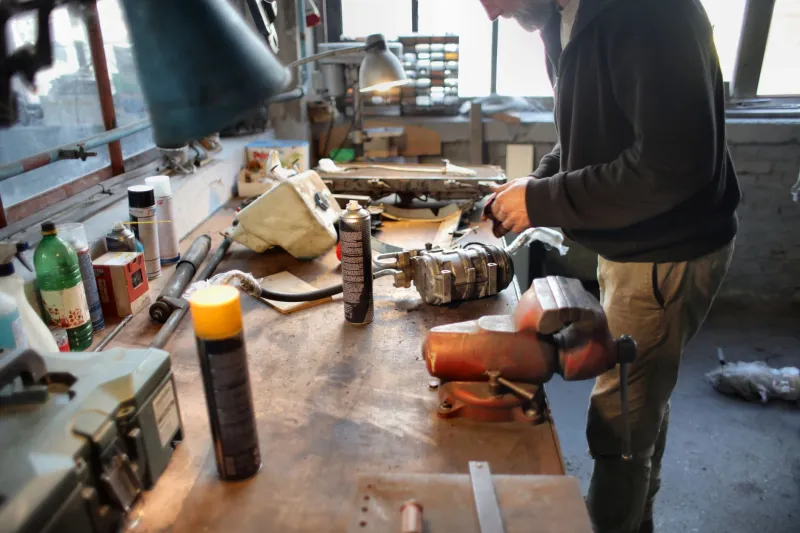
Photo: two mechanics arguing in garage workshop over tools and project car, via c8.alamy.com
It Started With a Handshake
Most garage partnerships don't start with a contract. They start with a handshake, a shared driveway, or a buddy who had the space and another who had the tools. Maybe it was brothers splitting their dad's shop after an inheritance. Maybe it was two friends who went in together on a project truck and split the costs down the middle. Maybe it was a semi-formal side business that never quite made it to an LLC.
However it started, it probably felt solid. And then, at some point, it stopped being solid.
Breaking up a garage partnership is one of those things the car community doesn't talk about enough. We've got plenty of content on how to build things together — very little on how to dismantle them cleanly. But it happens constantly, and when it does, the stakes are real. We're talking tools worth thousands of dollars, half-finished builds with serious money sunk into them, and sometimes the kind of emotional weight that comes with shared work and shared history.
So let's talk about it honestly.
The First Thing You Need to Do: Stop Working
This sounds obvious, but it isn't. When things get tense between partners, there's often a weird period where both people keep showing up to the shop, keep turning wrenches, and keep pretending everything is fine. That's how you end up with disputed improvements, blurry ownership, and arguments over who installed what.
The moment you know a split is coming — or even seriously possible — both parties need to pump the brakes on joint work. Don't add parts to the shared build. Don't buy new tools on the shared account. Don't make modifications that will complicate valuation later. The project needs to go on pause until you've got a plan.
It's uncomfortable. It might feel like abandoning something you care about. Do it anyway.
Inventory Everything. Seriously, Everything.
The single biggest source of conflict in a garage split is disputed ownership of tools and parts. The solution — and it's not a fun one — is a thorough, documented inventory before anyone takes anything home.
Go through the shop together if you can manage it, or bring in a neutral third party if you can't. List every tool, every piece of equipment, every part on the shelf. Note who originally purchased it, whether it was bought jointly, and what condition it's in now. Take photos. Date the document. Both parties sign it.
This feels bureaucratic. It is bureaucratic. It will also save you an enormous amount of grief when someone suddenly remembers that the floor jack was definitely theirs, actually.
For tools that were purchased jointly with shared funds, you've got a few options: one person buys out the other's share, you sell the item and split the proceeds, or you agree on a trade — one person keeps the jack stands, the other keeps the engine hoist. Get creative, but get it in writing.
The Shared Build Is the Hard Part
Dividing tools is annoying. Dividing a half-finished project car is genuinely painful, especially if both people have real emotional investment in it.
The cleanest outcome is usually a buyout — one person pays the other for their share of the vehicle and all the parts and labor that went into it. This requires agreeing on a value, which is where things get sticky. You're not just valuing the car as it sits; you're accounting for parts purchased, hours worked, and sometimes, the vision of what it was supposed to become.
A few approaches that actually work:
Get an independent appraisal. For project cars with significant value, a professional appraisal from someone who understands the market for that type of build is worth the cost. It takes the guesswork — and the arguing — off the table.
Use receipts, not memory. If you've been keeping records of parts purchases, that's your baseline for invested costs. If you haven't — and most people haven't — start reconstructing what you can from bank statements, emails, and invoices. Partial records are better than none.
Agree on labor value upfront, or agree it's zero. Labor is the thorniest part of any build valuation. If you can't agree on a fair hourly rate, it's sometimes easier for both parties to agree that personal labor doesn't factor into the split — only hard costs. That's not always fair, but it's often the path forward.
If neither party wants to buy the other out, selling the project outright and splitting the proceeds is a legitimate option. Yeah, it hurts to sell something you built. But it's a cleaner break than letting the car sit in limbo for years while the partnership festers.
When It's a Family Thing
Inherited shop partnerships — where two or more siblings or relatives end up co-owning a parent's garage, tools, and maybe an unfinished project — carry a whole extra layer of emotional complexity. The tools aren't just tools anymore. They're memory. They're grief. They're identity.
That doesn't change the practical steps, but it does mean you need to give yourself and whoever you're splitting with a little more grace. Try to separate the emotional weight of the objects from their monetary value. An old Craftsman toolbox might be worth $200 at a swap meet and priceless to someone who watched their dad use it every weekend. Talk about that. Acknowledge it. Then figure out a practical solution that respects both realities.
Family mediators who specialize in estate disputes exist for exactly this reason. If you can't get through the conversation without it turning into a fight about something that happened in 1998, there's no shame in bringing in a neutral party.
The Legal Side Nobody Wants to Think About
If your garage partnership involved any kind of shared business arrangement — a formal LLC, a shared bank account, a signed agreement, anything on paper — you need to loop in a lawyer before you start dividing assets. What feels like a straightforward split can get complicated fast if there are tax implications, outstanding debts, or signed agreements that govern how assets are distributed.
Even for informal partnerships, a simple written agreement outlining who gets what and signed by both parties is worth doing. If you end up in a dispute later, that document is your evidence. Without it, you're relying on memory and goodwill — and goodwill tends to run pretty thin by the time lawyers get involved.
Protecting Yourself Next Time
Once the dust settles, most people who've been through a garage split say the same thing: they wish they'd put something in writing from the start.
It doesn't have to be complicated. A simple one-page document that outlines who owns what, how jointly purchased items will be handled if the partnership ends, and how project vehicles will be valued and divided covers most of the major issues. Review it once a year. Update it when things change.
It might feel like you're planning for failure. You're not. You're protecting something you care about — the work, the tools, the friendship — by being honest about the fact that circumstances change.
The best garage partnerships are built on trust. The ones that survive a split are built on trust and paperwork.
The Garage Doesn't Have to Be the Casualty
Breaking up a wrench partnership is rough. There's no way around that. But handled right, it doesn't have to mean the end of the build, the end of the friendship, or the end of your time in the shop. Take it slow, document everything, and treat the other person the way you'd want to be treated when the roles are reversed.
Because in this hobby, they very well might be.