Who Gets the Toolbox? Planning Your Automotive Legacy Before It's Too Late
Photo: vintage toolbox inheritance garage workshop legacy tools, via i.pinimg.com
Nobody wants to think about it. You're elbow-deep in a carburetor rebuild, the radio's cranking, and the last thing on your mind is what happens to all of this after you're not around to enjoy it. But here's the uncomfortable reality: without a plan, your carefully curated tool collection, your half-finished project car, and every part you've been hoarding for the right moment could end up sold for pennies at an estate sale to someone who has no idea what they're looking at.
That's not a legacy. That's a loss.
This isn't a legal lecture or a doom-and-gloom piece about mortality. It's a practical guide for gearheads who care enough about their automotive life to make sure it lands in the right hands — and doesn't become a burden or a mystery for the people they leave behind.
The Real Problem: Your Family Doesn't Speak Wrench
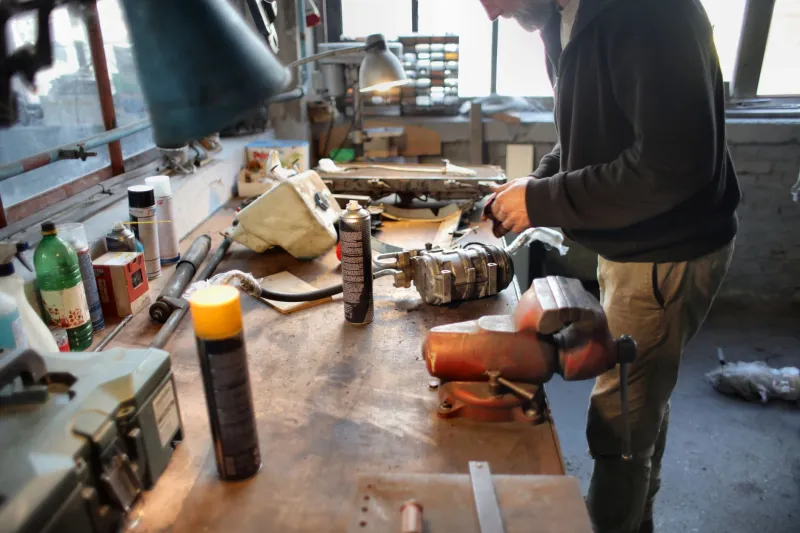
Most of us have spent years building a shop that makes perfect sense to us. The Snap-on rollaway in the corner, the specialty pullers hanging on the pegboard, the bins of fasteners sorted by thread pitch — it's a system. It has logic. It has value.
But to someone who didn't grow up in a garage, it looks like a pile of metal stuff.
That's the core challenge. The people who will inherit your garage almost certainly don't know what a quality set of Stahlwille combination wrenches is worth compared to the Harbor Freight set hanging next to it. They don't know that the project car in the bay isn't just a rusty hulk — it's a numbers-matching 1969 Chevelle that needs about $4,000 in work to be worth $60,000. They'll make decisions based on ignorance, not malice, and that's how generational tools get sold for scrap prices.
The fix is documentation, and it starts today.
Build a Tool Inventory — For Real This Time
A legitimate tool inventory doesn't have to be fancy, but it does have to be thorough. Walk through your shop with your phone and shoot video. Narrate as you go. Open every drawer in the toolbox and explain what you're looking at. Point out the stuff that has real monetary value — professional-grade ratchets, torque wrenches, specialty diagnostic equipment, hydraulic presses — and be specific about brand and condition.
For high-value individual pieces, take photos and jot down approximate replacement costs. A quick search on eBay's sold listings will give you a realistic market number for most tools. Store this information somewhere accessible: a shared Google Drive folder, a printed binder in the house, or a document saved with your other estate paperwork.
If you have vintage or particularly valuable tools — pre-war Craftsman, early Snap-on, Starrett measuring equipment — consider getting a formal appraisal. Collectors pay real money for the right stuff, and your family deserves to know that before they let someone lowball them at an estate sale.
The Project Car Conversation Nobody Wants to Have
Unfinished project cars are emotionally complicated, financially unpredictable, and logistically difficult to deal with. That's true for you right now, and it's doubly true for someone who doesn't share your passion.
Before you can have a productive conversation with your family about your project, you need to be honest with yourself about a few things. What is it actually worth in its current state? What would it take to finish it, in dollars and hours? Is there a realistic buyer for it as-is, or would it need to be completed to fetch a fair price?
Write that information down. Include the title and registration status, any documentation you have about the car's history or numbers matching status, a list of parts you've already purchased, and your best estimate of what a knowledgeable buyer would pay for it today versus finished.
Then have the conversation. Sit down with whoever will be handling your estate — spouse, kids, a trusted friend — and explain what the car is, what it means to you, and what you'd like to see happen to it. If there's someone in your life who'd actually want to continue the build, say so explicitly. If you'd rather it go to a specific buyer or be sold through a marque-specific club where enthusiasts will understand its value, write that down too.
Vague wishes don't hold up when grief is in the room and someone's trying to clear out a garage.
Getting the Legal Side Right
Your will or trust is the right place to spell out your intentions for specific property, and automotive assets are no different from jewelry or firearms in that regard. You can name specific beneficiaries for specific items — "my Snap-on toolbox and its contents to my son Marcus" or "the 1969 Chevelle to my nephew Daniel, provided he completes the restoration within five years" — though the more complex the conditions, the more important it is to work with an estate attorney to make sure the language holds up.
For project cars with titles, make sure the title is clean, current, and accessible. A car with a lost title or a title that's been sitting in a dead person's name is a legal headache that can drag on for months. In most states, a surviving family member can apply for a new title through the DMV, but the process varies and it's a hassle nobody needs during an already difficult time.
If your estate includes significant automotive assets — a valuable collection, multiple project cars, or a well-stocked professional-grade shop — it's worth talking to an estate attorney and possibly a certified personal property appraiser who specializes in tools and vehicles. The cost is modest compared to the value at stake.
The Emotional Weight of All of It
Here's the part that doesn't fit neatly into a checklist. Your garage isn't just stuff. It's the Saturday mornings you spent with your dad learning to gap plugs. It's the first car you built from scratch. It's the place you went when everything else felt out of control.
The people who love you know that, even if they don't fully understand it. And a lot of family conflict around estate situations comes not from greed or indifference, but from not knowing what something meant and making the wrong call as a result.
Leaving a note — not a legal document, just a personal letter — about why certain things matter to you can do more good than you'd expect. Tell the story of the toolbox. Explain where the car came from and what you were building toward. Give the people who come after you the context to make decisions you'd be proud of.
Start Now, Not Someday
None of this requires a lawyer or a weekend of work. Start with an hour in the garage with your phone. Film the space, narrate the highlights, save the video somewhere your family can find it. That single step puts you ahead of ninety percent of enthusiasts who've never given this a second thought.
Your tools took years to collect. Your projects carry real history. They deserve better than a tarped-over mystery that ends up parted out on Craigslist by someone who doesn't know what they had.
Plan for it. Your future self — and the people who love you — will be glad you did.