Know Your Lane: The Unwritten Social Rules of Every Shared Garage
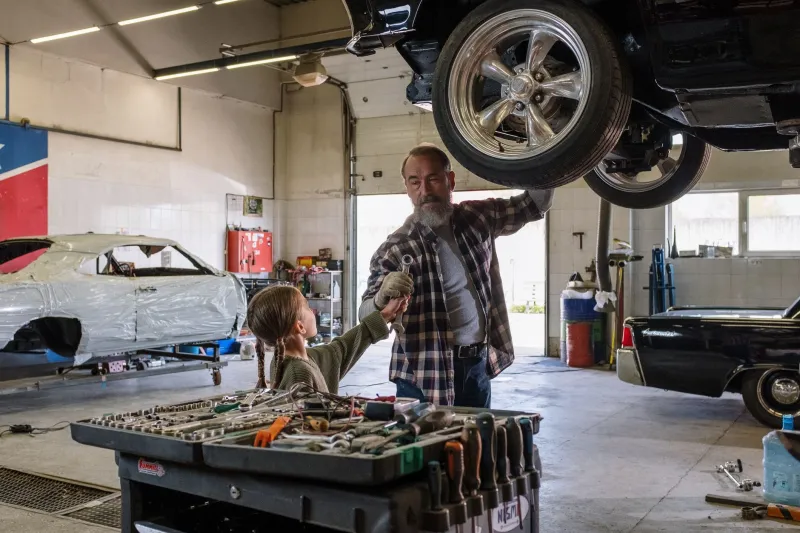
Walk into any shared garage — a buddy's three-car setup, a co-op shop, or a rented bay at one of those DIY-friendly garages popping up around the country — and within five minutes you'll feel it. There's a vibe. An order. A quiet understanding of who calls the shots, who asks before touching anything, and who still owes everyone a six-pack from three weekends ago.
Nobody posts the rules on the wall. Nobody hands you a pamphlet. But break them and you'll know about it real fast.
Let's talk about the garage hierarchy — who's in it, what they do, and how you figure out where you fit.
The Keeper of the Keys
This is the person whose garage it actually is. Maybe they own the house, maybe they pay the lease on the commercial space, but either way — their name's on the line. The Keeper sets the culture, and that culture flows downhill to everyone else.
If the Keeper is meticulous — tools hung on a pegboard in perfect silhouette outlines, floor swept before anyone leaves — then that's the standard. You don't get to be sloppy in someone else's house. If the Keeper runs a looser operation, there's still a line you don't cross without asking.
The most important thing to understand about the Keeper: respect isn't optional. You can disagree with their methods privately. You don't second-guess them in front of the group, and you absolutely don't go rearranging their space without permission. That's not a suggestion — that's the foundation everything else is built on.
The Senior Wrench
Every shop has one. This is the person who's been around longest and has the scar tissue to prove it. Not necessarily the most credentialed — the Senior Wrench might be a self-taught weekend warrior who's been turning bolts since Carter was in office — but they've earned their standing through time, consistency, and results.
The Senior Wrench is who you go to when the repair manual doesn't cover your specific flavor of nightmare. They've seen things. They've cursed at things. They've fixed things that had no business being fixed. And they have opinions — strong ones — about penetrating oil, torque specs, and why you should never, under any circumstances, use vice grips on a brake line.
If you're new to a garage, the fastest way to get the Senior Wrench on your side is simple: shut up and watch. Ask questions when it's appropriate, not when they're mid-diagnosis. Say thank you and mean it. And for the love of everything mechanical, don't show up with a YouTube tutorial and tell them they're doing it wrong.
The Reliable Middle
These are the people who keep the garage running. They're not the Keeper, they're not the legend — they're the ones who actually show up every Saturday, know where everything is, and can be trusted to run a task start to finish without supervision. The Reliable Middle is the backbone of any functional shop culture.
Being part of the Reliable Middle is actually a great place to be. You've got credibility without the pressure of being the top dog. You've got enough experience that people respect your input, and enough humility to know you're still learning. The goal for most of us is to stay in this zone — competent, dependable, and genuinely useful.
The Enthusiastic Newcomer
Every garage has one of these at some point. They just bought their first project car, they've watched a thousand hours of build videos, and they are fired up. They want to help. They want to learn. They ask a lot of questions — sometimes the same question twice.
Here's the thing: the Enthusiastic Newcomer isn't a problem. They're an opportunity. The garage culture that takes time to bring a newcomer along properly is one that stays healthy and keeps growing. The one that hazes them out or ignores them is the one that eventually becomes three grumpy guys wrenching in silence.
If you are the newcomer, here's your playbook. Bring food. Offer to do the unglamorous stuff — parts runs, holding the flashlight, cleaning up. Don't pretend to know things you don't. Ask how you can help before you start helping. And understand that trust is earned in small increments, not handed out because you showed up twice.
The Part-Timer and the Ghost
These are the people who float in and out. Maybe they show up when they need something fixed and disappear when it's time to clean up. Maybe they're just there for the company and the conversation, not really doing much wrenching.
Part-timers aren't automatically a problem — life gets busy, and not everyone has the same bandwidth. But if someone's consistently consuming the space, the tools, and the knowledge without contributing anything back, the group will notice. Garage culture runs on reciprocity. You give what you can, you take what you need, and you keep the ledger somewhere close to balanced.
How Respect Actually Gets Earned
In a garage, respect doesn't come from what you drive or how much your tool collection cost. It comes from:
- Showing up when you said you would. Reliability is currency.
- Doing what you said you'd do. Don't volunteer for a job you can't finish.
- Cleaning up after yourself. Every time. Without being asked.
- Being honest about what you don't know. Guessing on someone else's car is how friendships end.
- Sharing knowledge freely. The garage that hoards information is the garage that stagnates.
The hierarchy isn't about putting people down — it's about knowing who to defer to and when. A good shop culture is one where the Keeper trusts the Senior Wrench, the Senior Wrench mentors the Reliable Middle, the Reliable Middle brings along the Newcomer, and everybody gives the Part-Timer enough rope to either step up or step back.
Figure out where you are in that chain. Respect the people above you. Invest in the people below you. And always, always put the tools back where you found them.