Metric or SAE? Why American Mechanics Are Stuck Carrying Both — And How to Stop Overpaying for It
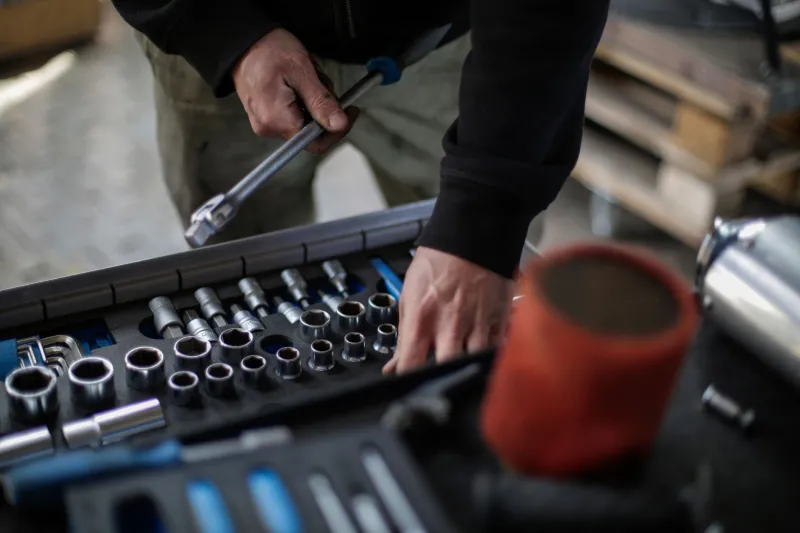
Open the tool drawer of any experienced American mechanic and you'll find the same chaotic evidence of a decades-long identity crisis: SAE sockets on one side, metric on the other, and somewhere in the middle, a ratchet that's been lost and found four times. This isn't disorganization. It's history.
The United States is one of the last holdouts against the metric system, and nowhere does that stubbornness show up more clearly than in the automotive world. American-made vehicles ran on SAE (Society of Automotive Engineers) fasteners for most of the 20th century. Then imports started flooding the market. Then domestic manufacturers started sourcing parts globally. And somewhere along the way, the clean line between "metric cars" and "SAE cars" got completely erased.
So here we are — carrying both systems, paying for both systems, and occasionally grabbing the wrong socket at exactly the wrong moment.
How We Got Here
Back when Detroit ruled the road, SAE was king. Fractions of an inch — 3/8", 7/16", 1/2" — were the language of American iron. When Japanese and European manufacturers started gaining serious market share in the '70s and '80s, metric fasteners came along for the ride. Mechanics who'd spent their careers on American cars suddenly needed a whole new set of tools to work on Toyotas and Volkswagens.
Then things got complicated. GM started using metric fasteners in some models as early as the late '70s. Ford and Chrysler followed. Today, a modern domestic truck might have metric bolts holding the engine together and SAE hardware on the trailer hitch. There's no rhyme or reason — it depends on the supplier, the platform, and sometimes seemingly on a coin flip.
The result is that every serious DIYer in America needs both systems. Full stop. The question isn't which one to choose. The question is how to build both collections intelligently without hemorrhaging money.
The "Close Enough" Trap
Before we get into strategy, let's address the most dangerous habit in this debate: using a close-size substitute from the other system.
A 14mm socket and a 9/16" socket are not the same thing. They're close — close enough to seat on a fastener, close enough to feel like they're working — but 9/16" is 14.29mm, and that difference is enough to round a bolt head if you're putting real torque on it. Same problem with 11mm versus 7/16", or 19mm versus 3/4".
This is how people destroy hardware. And once you've rounded a bolt head on something critical, you've turned a 20-minute job into an afternoon of suffering and a parts store run. Buy the right size. Every time.
Building Smart: What to Buy First
If you're starting from scratch or filling gaps in your collection, here's a practical framework:
Start with the sizes you'll actually use. For metric, the heavy hitters are 8, 10, 12, 13, 14, 15, 17, 18, 19, and 22mm. For SAE, you'll lean on 1/4", 5/16", 3/8", 7/16", 1/2", 9/16", 5/8", 3/4", and 7/8" most often. These aren't the glamorous deep-dive sizes — they're the ones you'll grab ten times before you ever touch anything exotic.
Buy sets, not individuals, at first. A decent combo set from a reputable brand covers both systems in one shot. Brands like GearWrench, Tekton, and Proto offer solid quality without the Snap-on price tag, and they're available at most auto parts stores or online. Once you know what you're actually missing, then you buy individual pieces.
Invest more in the tools you use daily. Ratchets, combination wrenches, and your most-used socket sizes deserve quality. That's where the money goes. The obscure sizes you use twice a year? Budget brands are fine.
What Shops Are Actually Doing
Talk to mechanics at independent shops across the country and you'll get the same story: most of them stopped thinking in terms of "metric shop" versus "SAE shop" years ago. The work dictates the tools.
Mike, a shop owner in Tennessee who's been running his own operation for over 20 years, keeps his sockets organized by drive size, not measurement system. "I don't care if it's metric or SAE — I care if it's the right size for what I'm touching," he says. "My guys know to grab the tray and check both sides. That's just how modern cars work."
A mobile mechanic in the Phoenix area told us she invested in two complete sets — one metric, one SAE — early in her career and has never regretted it. "The cost upfront hurt, but I've never had to stop a job because I didn't have the right tool. That's worth more than whatever I saved."
The Conversion Cheat Sheet Myth
There are charts floating around that show metric-to-SAE conversions, implying you can "get by" with one system if you know the equivalents. Ignore them for anything structural. For checking a measurement or understanding a spec sheet, sure, they're useful. For actually turning fasteners on a vehicle, you need the correct tool for the fastener in front of you. Period.
The Practical Bottom Line
The metric vs. SAE debate isn't really a debate anymore — it's a both/and situation that every serious American mechanic has already accepted. The smarter conversation is about how to build your collection without wasting money on redundant junk or getting caught short on a critical size.
Buy quality where it counts. Fill gaps methodically. Organize both systems so you can find what you need without thinking about it. And stop using that 9/16" on a 14mm bolt — you know exactly what happens next.