Wake the Dead: A Gearhead's Reality Check for Reviving a Car That's Been Sitting Too Long
There's a specific kind of trouble that starts with the words "it just needs a little work." Maybe it was your uncle's old Camaro, sitting under a tarp for eleven years. Maybe you found it on Facebook Marketplace listed as a "project with potential" and talked yourself into it at 11pm on a Tuesday. Maybe it's been in your own garage for three years and you keep saying you'll get to it.
Whatever the backstory, you've got a car that hasn't moved under its own power in a long time, and now you're ready to bring it back. That's a great impulse. It's also the beginning of a process that will test your patience, your budget, and your ability to be honest with yourself.
Let's talk about how to do this right.
Step One: Don't Touch the Key Yet
The instinct when you get a long-dormant car into the garage is to just try to start it. Resist that. A car that's been sitting for years has stale fuel in the lines, varnish in the carburetor or injectors, oil that's settled and potentially contaminated, and rubber seals that may have dried out completely. Cranking it over without addressing those issues first is a good way to cause problems that didn't exist five minutes ago.
Start with a thorough visual inspection before anything else. Get underneath it. Look at the frame and floor for rust — not surface rust, but the structural kind that flexes when you poke at it. Check the brake lines for corrosion or cracks. Look at the fuel lines. Pull the spark plugs and look into the cylinders for signs of moisture or scoring. This initial walk-around tells you whether you've got a project or a parts car, and that's a critical distinction to make before you spend a dime.
The Hidden Problems That Always Surface
Every resurrection project has surprises. Every single one. Here are the ones that catch people most often:
Fuel system contamination. Old gasoline turns into varnish. It coats the inside of carburetors, gums up injectors, and can damage fuel pumps. Plan on a full fuel system flush, a carb rebuild or injector cleaning, and a new fuel filter at minimum. If the tank has rust inside — and on older cars it often does — that's a bigger job that can't be skipped.
Brake system failure. Brake calipers and wheel cylinders seize. Rubber brake hoses collapse internally, restricting fluid flow in ways you won't see from the outside. Master cylinders corrode. If a car has been sitting more than two or three years, budget for a complete brake system inspection and assume you'll be replacing more than you think. This isn't optional — it's safety-critical.
Cooling system degradation. Antifreeze breaks down over time and becomes acidic, attacking the aluminum components in modern engines and causing corrosion throughout the system. Hoses get brittle. Thermostats stick. A full coolant flush and system inspection should be on the list early.
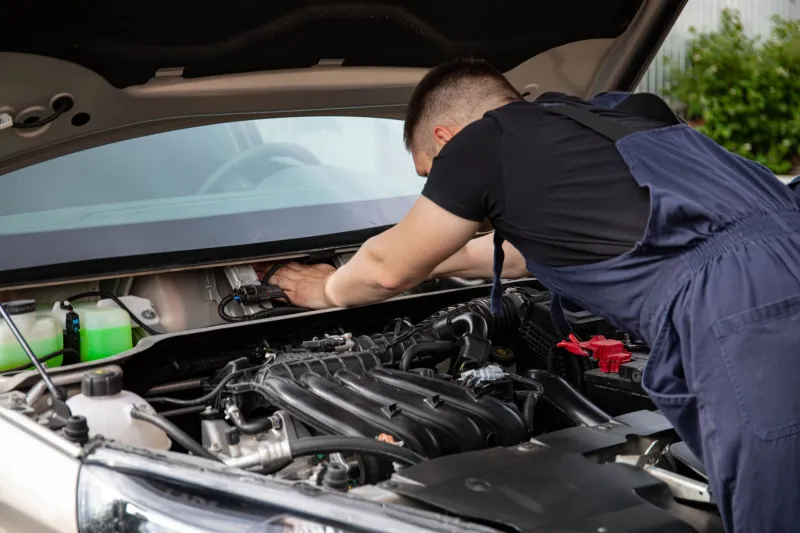
Electrical gremlins. Rodents love to nest in dormant cars, and they love to chew wiring even more. Check the engine bay, the interior, and underneath the dash carefully. Even without rodent damage, connectors corrode, ground straps fail, and battery cables develop resistance that causes all kinds of confusing symptoms.
Prioritizing the Work: What Comes First
When you're staring at a car that needs everything, it's easy to get paralyzed or to start chasing interesting jobs instead of necessary ones. Here's a framework that keeps you moving in the right direction:
Safety first, always. Brakes, tires, steering, and lighting. Nothing else matters if the car isn't safe to move under its own power. Get these sorted before you ever pull it out of the garage.
Then, make it run. Fuel system, ignition system, cooling system. Get it to the point where it starts, runs, and doesn't immediately overheat or leak fuel. This is your proof of concept — confirmation that the engine and drivetrain are actually worth investing in.
Then, make it reliable. Belts, hoses, filters, fluids. All the maintenance items that would have accumulated if the car had been driven regularly. This is the unglamorous work that separates a car that runs from a car you can actually depend on.
Then, make it yours. Cosmetics, upgrades, personalization. This is the fun part — but it belongs at the end of the list, not the beginning.
Managing the Gap Between Memory and Reality
Here's where resurrection projects get emotionally complicated. If this car has meaning — it belonged to someone you loved, it's a model you've dreamed about since you were a kid, it's the car you had your best years in — there's a version of it living in your head that may not match what's sitting in front of you.
That's okay. Nostalgia is part of why we do this. But it becomes a problem when it overrides your judgment. When you convince yourself the rust isn't that bad because you really want this car to be saveable. When you keep pouring money into a fundamentally compromised platform because walking away feels like losing something.
Set a budget before you start. Not a vague "I'll spend what it takes" budget — an actual number, with a hard ceiling. Decide in advance what conditions would make you stop the project. Write it down if you have to. Having that conversation with yourself before you're emotionally invested in three months of work is a whole lot easier than having it after.
The Moment It All Comes Together
Here's the other side of it: when a resurrection project works, there's nothing quite like it. The first time a long-dead engine catches and settles into an idle, the first drive around the block in something you brought back from the edge — that's a feeling that doesn't need any embellishment.
The projects that get there are the ones that started with honest assessment, smart prioritization, and enough patience to do it right instead of fast. Take your time with the inspection. Fix what needs fixing in the right order. Keep your expectations grounded in reality, not in what the car used to be.
Do that, and there's a real chance the car lives again. And this time, it'll be yours.