Cheap Wrecks, Expensive Lessons: Why a $500 Junker Is the Best Teacher in the Garage
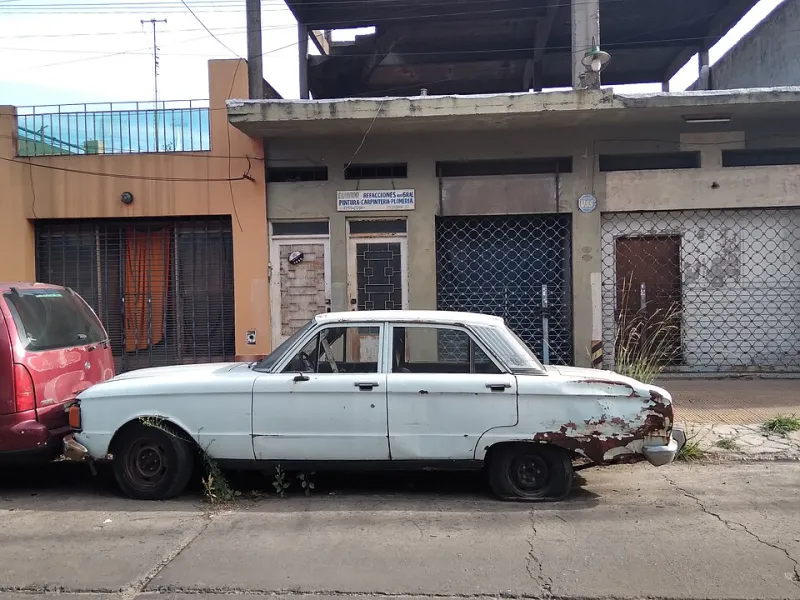
Photo: Maxi-Napo-99, CC BY 4.0, via Wikimedia Commons
There's a moment in every young wrencher's life when the training wheels come off. Not the first oil change. Not the brake pads on Mom's Camry. I'm talking about the first car you buy knowing it's a pile — a $500 junker with a check-engine light that's been on since the Obama administration, a title signed over in ballpoint pen, and enough character to keep things interesting.
This is the beater challenge, and it's the most honest automotive education money can buy.
The Rules of the Game
The premise is simple: find something that runs (mostly), drives (sort of), and passes inspection in a state that still has inspections — all for less than five hundred bucks. Then spend the winter fixing what's broken, upgrading what annoys you, and documenting every mistake.
The budget is the whole point. When the car costs less than a set of Michelin Defenders, you stop being precious about it. You'll pull the intake manifold on a Tuesday night just to see what's under there. You'll wire up a used head unit with sketchy crimp connectors and learn why the radio cuts out when you hit the turn signal. That curiosity — the willingness to just dig in — is nearly impossible to develop on a car you're afraid of.
What to Hunt For
Not all beaters are created equal. Some platforms are gifts from the gods of DIY:
- The Ford Crown Victoria (or Grand Marquis / Town Car): Body-on-frame, Panther-platform simplicity, and a 4.6L V8 that laughs at neglect. Parts are everywhere because every taxi fleet and police department in America ran these into the ground before you got there.
- A 90s half-ton truck: A Chevy 1500 with the 4.3L or a base Ram with a slant-six-era attitude. Everything on these trucks is accessible with basic hand tools, and nobody blinks when one's parked on a lawn with the hood up.
- A base-model Honda or Toyota: Civics, Corollas, Accords — the archetypal beater. Boring, yes. Bulletproof and endlessly documented on forums, absolutely.
Avoid anything with known catastrophic issues for the price — a $500 BMW is a $5,000 car with a $500 down payment.
The Syllabus of Failure
Here's what no manual teaches: every breakdown on a beater is a chapter in your education, and you'll fail your way through most of them.
A dead fuel pump teaches you about fuel pressure diagnosis, dropping a tank (or better yet, pulling a bed on a truck), and why you should never assume the part you installed last month is still good.
A no-start on a cold morning teaches you the ignition and starting system end to end — spark, fuel, compression, in that order — because you'll trace it three times before you find the corroded ground strap that was the culprit all along.
A mystery vibration teaches you that tires can be bad even when they look fine, that cheap Amazon ball joints are a false economy, and that torque wrenches exist for a reason.
A blown head gasket teaches you whether you actually like wrenching. It's the final exam. Some people tear down the engine over a long weekend in January and come out the other side a different person. Some people sell the car to a scrap yard and take up golf. Both are valid outcomes.
Budgeting Without the Fantasy
Set aside the sticker price and assume you'll spend another $300–$600 in parts over the winter. That's not a failure — that's the plan. The beater is a tuition payment. Keep a running log of every part, every hour, and every four-letter word. By spring, you'll have a real document: what repairs cost, what your labor is worth, and which jobs you'd farm out vs. tackle yourself.
That log is worth more than the car. When the real project — the Fox Body, the squarebody, the air-cooled 911 you have no business buying — eventually rolls into your garage, you'll look at it with eyes that have already been burned. You'll price parts before you buy the car. You'll check for rust before you fall in love. You'll know what a "minor" brake job actually involves.
The Real Payoff
Nobody buys a $500 Crown Vic for the resale value. You buy it for the reps. For the confidence of knowing that when something breaks — on this car or any car — you can pop the hood and at least understand what you're looking at.
And there's a cultural piece to it, too. The beater is a rite of passage as American as a tailgate grill. Ask any old-timer at a cruise night what their first car was, and watch them light up describing some $300 disaster they kept alive with bailing wire and optimism. The junker isn't the car you keep. It's the story you keep.
So this winter, when the classifieds fill up with "runs great, just needs work" listings, consider putting your money where your education is. Buy the pile. Break some bolts. Learn the lessons while the stakes are five hundred bucks instead of five thousand.
The books can wait. The beater can't.